
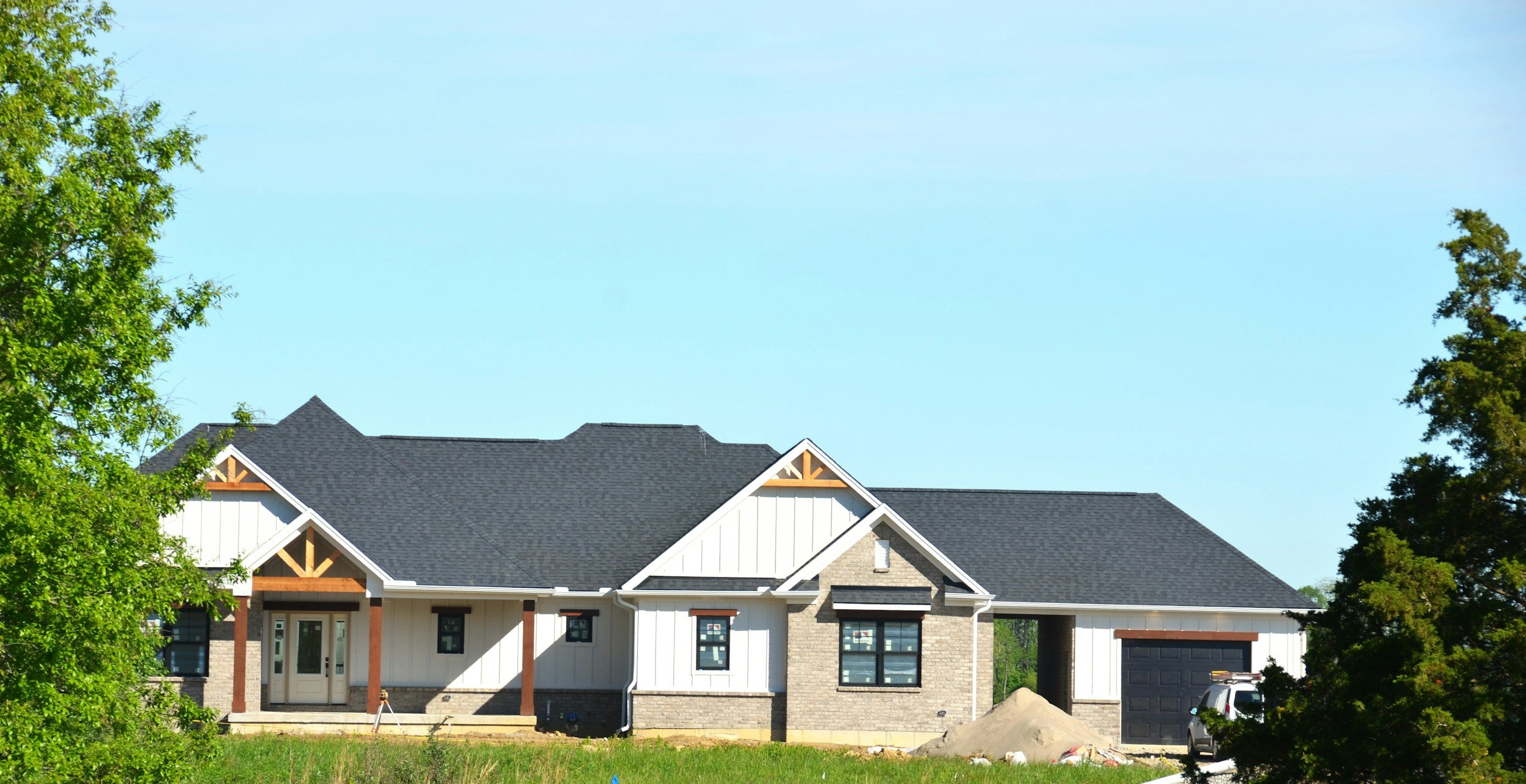
Builders pulled back on new single-family homes in October. Single-family building permits fell 8.7% to a seasonally adjusted annual rate of 772,000, the lowest level since January 2023. That is also 12.9% below October of last year. There was one bright spot: housing starts jumped 9.9% in the same report. But permits are the early signal. They show what builders plan to start next, and right now that plan is getting smaller.
Single-Family Building Permits Fall to the Lowest Level Since 2023
The U.S. Census Bureau released its new residential construction report on November 18. Total building permits came in at a seasonally adjusted annual rate of 1,295,000 in October. That is 7.4% below September’s revised 1,398,000 and 8.7% below October 2025. It is also the lowest total since May 2020, according to the Census historical series.
The single-family number is the one that stands out. Permits for one-unit homes dropped to 772,000 from a revised 846,000 in September. You have to go back to January 2023, when the rate was 755,000, to find a weaker month. Back then, builders were still reacting to the sharp jump in mortgage rates during 2022. Today they are dealing with rates above 7%.
Apartments and condos slipped too, though not as much. The National Association of Home Builders said multifamily permits fell 5.3% to an annual pace of 523,000, down 1.7% from a year earlier.
Housing Starts Bounced Back in the Same Report
Now for the good news, because the report was not all bad. Builders actually broke ground on more homes in October. Total housing starts rose 9.9% to a seasonally adjusted annual rate of 1,309,000, up from a revised 1,191,000 in September. That is 2.8% higher than October 2025.
Single-family starts rose 4.0% to 864,000 from 831,000. Apartment and condo starts did the heavy lifting. NAHB said multifamily starts climbed 23.6% to 445,000 and are up 17.1% from a year ago.
So why lead with permits instead of the bounce in starts? Two reasons.
Starts are noisy. The Census Bureau’s own margin of error on that 9.9% monthly gain is plus or minus 16.8%. In plain terms, the true change could be much smaller. Permits are counted more precisely.
The single-family rebound was small. NAHB noted that single-family starts are still down 3.2% from October 2025 and 4.6% year-to-date. October was the year’s second-slowest pace for single-family starts, even after the gain.
NAHB put it carefully. “The gain in housing starts is encouraging but does not necessarily signal a sustained recovery,” said Bill Owens, NAHB’s chairman and a builder from Worthington, Ohio. Danushka Nanayakkara-Skillington, NAHB’s assistant vice president for forecasting and analysis, added that “the monthly gain should be viewed cautiously as affordability challenges and economic uncertainty persist.”
Why a Drop in Permits Matters More Than It Sounds
Think of a building permit as a reservation. A builder files for it before the dirt moves. Most permitted homes get started within a few months, and a single-family house usually takes several months more to finish. So when permits fall this sharply, it is a hint about how many new homes will be ready for buyers next year, not just this month.
Completions already show the slowdown working through. Builders finished homes at a seasonally adjusted annual rate of 1,272,000 in October. That was up 6.5% from September, but it was 10.4% below October 2025. Single-family completions were 900,000. NAHB counts 581,000 single-family homes still under construction, along with 691,000 apartments.
That pipeline will keep some new homes coming for a while. What happens after it clears is the question. Fewer permits today usually means fewer move-in-ready homes about a year from now.
Builders Are Losing Confidence and Cutting Prices
Builders are not pulling back by accident. NAHB’s Housing Market Index fell four points to 25 in November, the lowest reading since April 2012. Any score under 50 means more builders see conditions as poor than good. The gauge of buyer traffic fell to 16.
The same survey showed 46% of builders cut prices in November, the highest share since Covid, with an average cut of 6%. And 68% offered sales incentives. NAHB Chief Economist Robert Dietz pointed to “mortgage rates above 7%, softer consumer confidence and an uncertain economic outlook” as the things holding buyers back. We covered that survey in detail in Builders Cut Home Prices at a Post-Covid High of 46 Percent.
When builders have unsold homes and fewer shoppers walking through models, the sensible move is to file fewer permits. That is exactly what October’s numbers show. Owens also mentioned labor shortages and higher material and fuel costs, which make each new home more expensive to build in the first place.
Where Mortgage Rates Fit Into This
Mortgage rates are a big part of this story. Freddie Mac said the average 30-year fixed rate was 7.28% as of November 19, up from 7.11% the week before. A year ago it was 6.26%. The 15-year fixed averaged 6.66%.
That matters for builders in two ways. Their buyers face higher monthly payments, so fewer of them qualify. And many builders borrow to buy land and pay for construction, so higher rates squeeze their own budgets too. Both push them to build less until demand looks steadier.
Fewer permits will not move mortgage rates by themselves. Rates follow inflation, the bond market and the Federal Reserve. Earlier this week we looked at how a hotter inflation report pushed rates higher. If rates ease in the months ahead, builders could bring permits back up. If they stay above 7%, expect builders to keep the pipeline lean.
What Fewer Permits Mean for Home Buyers
Here is the tricky part. A slowdown in building sounds bad for buyers, and over the long run it is. The country still needs more homes, and building fewer of them keeps supply tight. But in the short run, this moment can actually work in your favor.
The good side right now:
Builders still have homes under construction and finished homes to sell. Nearly half are cutting prices, and most are offering incentives.
Many builders are offering lower rates through their own lenders. Realtor.com found new-home buyers saved about $258 a month with these discounts, which we explained in this breakdown of builder rate discounts.
With buyer traffic weak, you may have more room to ask for closing-cost help or upgrades.
The risk down the road:
Fewer permits now can mean fewer new homes for sale next year.
When demand comes back, a thin supply of new homes could push prices up again.
Neighborhoods that depend on new construction may see fewer choices once today’s inventory sells.
My take is simple. If you have been shopping for a new home and the payment works at today’s rate, this is a good time to negotiate hard with builders who are sitting on inventory. Ask what they will do on price, on the rate and on closing costs. Compare that package to a quote from your own lender. Just don’t stretch your budget on the hope that rates will fall soon. Pick a home you can afford if rates stay where they are.
The Bottom Line on Building Permits
October’s report sent a mixed message, but the permit number is the one to watch. Single-family permits hit 772,000, the weakest pace since early 2023, while starts posted a one-month bounce that even builders are treating with caution. Today, that slowdown gives buyers some leverage with builders. Later, it could mean fewer new homes to choose from. The next Census report comes out in December, and it will show whether October was a dip or the start of a longer pullback.
Source: Norada Real Estate