
Can Chobani’s $1.2 billion plant stop the long-term decline of Pa.’s dairy industry
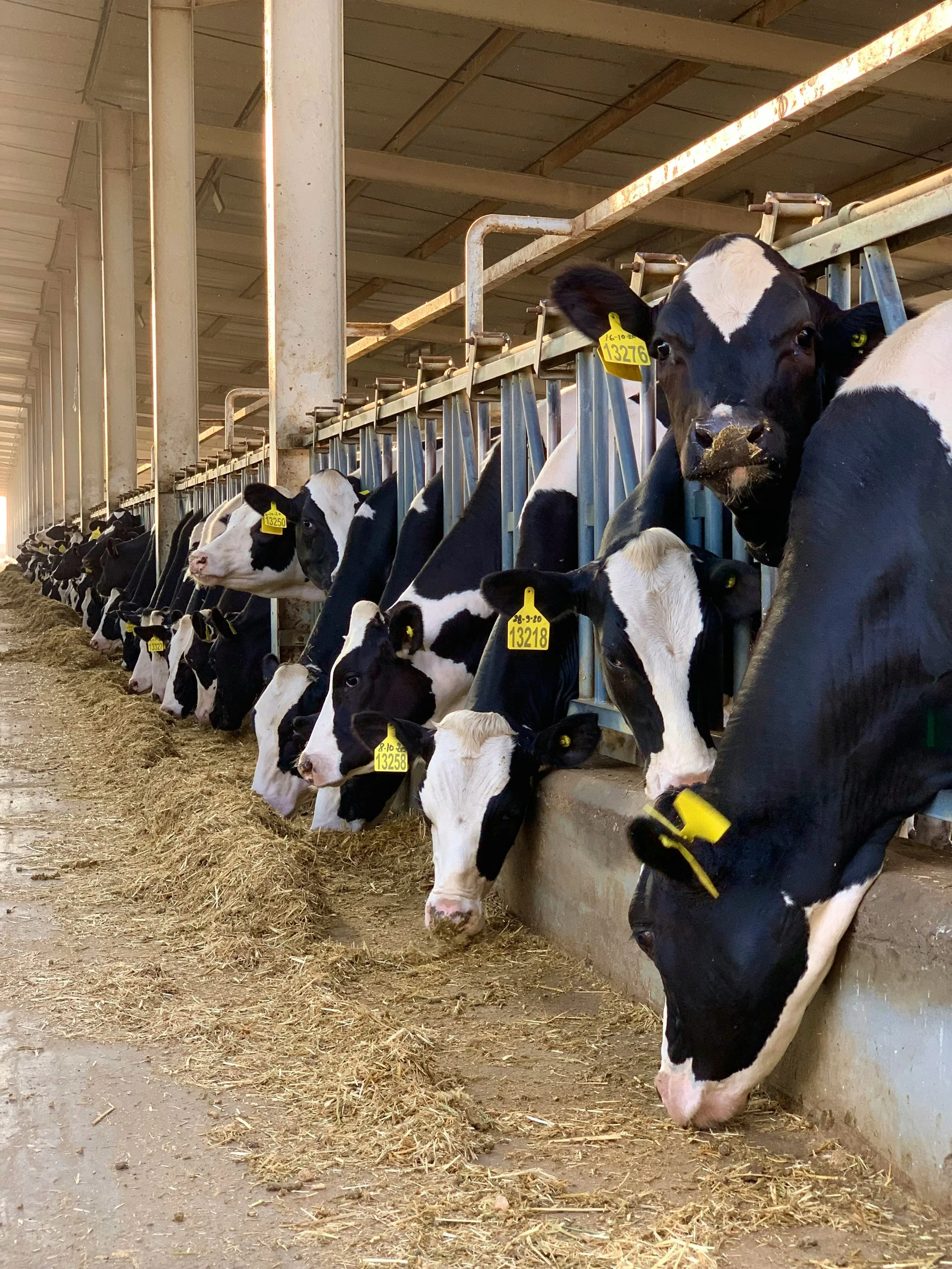
There aren’t a tremendous number of people who live or work on farms in 21st Century Pennsylvania. And yet, it’s hard to overstate the impact this month’s announcement of plans for a new Chobani plant near Allentown will have on the state’s dairy sector, and by extension, all us non-farm folks, too.
Some say the demand for milk Chobani will create has the potential to put the state’s dairy industry in full-on growth mode for the first time since, by some measures, World War II.
According to federal stats, U.S. per capita dairy consumption is growing, fueled by demand for products like yogurts, cheeses and other high-protein foods.
But there’s a uniquely Pennsylvanian problem here.
Fluid milk consumption — that glass of milk Mom made you drink with dinner — has declined since 1945. Milk as beverage also happens to be the traditional core of Pennsylvania’s dairy processing capacity.
As a result - Farm Show milkshakes and butter sculptures notwithstanding - dairymen here have been trying to manage decline for generations.
Now this: When fully operational, the new Chobani facility promises to process more than 3 billion pounds of milk annually, equal to about 30% of all milk currently produced in Pennsylvania.
So the market is suddenly looking at the Mid-Atlantic region’s farmers and saying: “Oh by the way? We’re gonna need more milk.”
Lots of dairy farmers here have never operated in that environment.
They chose Pennsylvania
A lot of the dairy industry’s recent growth has, until now, passed Pennsylvania by.
Corey Geiger, lead dairy economist with Wisconsin-based CoBank, tracks new investment in dairy nationally from public sources.
Before the Chobani announcement, he counted $13 billion of new investment in dairy processing scheduled to come on line through 2028.
Most of it, he told PennLive, was going to places like Idaho, the Interstate 29 corridor in the upper Midwest, and, closer to home, New York state.
Pennsylvania, which ranks 8th in milk production nationally, was nowhere near the top of the list.
But with the $1.2 billion Chobani announcement it has landed one of the biggest fish out there, and may have moved into third place overall.
The Norwich, N.Y.-based firm is buying a 1.5 million-square-foot facility in Upper Macungie Township, Lehigh County that’s now operated by Keurig Dr Pepper.
Chobani founder and CEO Hamdi Ulukaya said the deal will close this fall, followed by $270 million in plant upgrades needed to create Chobani’s products.
Production is expected to begin in mid-summer 2027.
Chobani says it will use its 20 years of dairy expertise to take farm-fresh milk, process and pasteurize it, and remove water to increase the protein level.
Known as Chobani Super Milk, the product will be available for sale and serve as the foundation for other dairy products, such as high-protein shakes.
With plans for up to 10 production lines, Allentown will give Chobani the capacity to scale these new products while continuing to develop new food and beverage platforms.
The state is chipping in with up to $15 million per year in tax credits against corporate net income or other state taxes. The credits earned will be based on the volume of milk originating at Pennsylvania farms.
Besides proximity to Pennsylvania’s farms, Allentown’s location provides another major advantage.
The plant site sits within 500 miles of approximately 40 percent of the U.S. population, providing ready access to some of the country’s largest consumer markets.
This feels like a sweet reward for Pennsylvania dairy farmers who have mostly been working hard to hang on in recent decades.
Just in the Harrisburg area alone, dairy processors have abruptly cancelled contracts or closed in the last few years, forcing farmers to scramble to find new buyers for their milk.
In 2022 poultry farming overtook dairy as the biggest segment of the state’s agriculture economy, as measured by sales.
So Chobani’s announcement landed differently.
“If I was planning to be in operation for at least 10 more years, I’d be pretty excited,” Geiger said. “It’s something that the state and its dairy leaders have been striving for for quite some time here.”
One midstate farmer PennLive spoke to for this story, however, is not yet ready to throw a parade.
That’s because at a time when he’s facing increased costs in just about every input — feed, fertilizer and fuel — he’s concerned making the right price.
In a commodity market like milk, he said, he wonders if extra demand coming out of Allentown is going to raise the number he sees on his milk checks.
“My honest opinion? It’s not going to change our bottom line one bit,” said the farmer — a member of a major cooperative who asked not to be identified in order to speak frankly.
He invited us to check back after Chobani is up and running so time can tell.
Jayne Sebright, executive director of Pennsylvania’s Center for Dairy Excellence, concedes there are no guarantees in commodity markets.
But she sees three ways that individual farmers can benefit:
With more the buyers in the market, cooperatives are more likely to have the leverage to ask for premiums on top of the federally-set base prices, which would ultimately pass through to the farmers in the form of a bump on their milk check.
That will take a little time to shake out, Sebright concedes, but the more buyers there are in any regional market, those buyers have to do something to attract that milk.
“It’s really advantageous to all farms in the state, because it will help boost demand for milk across the state, and across the whole Mid-Atlantic region,” Sebright said.
Allentown is a relatively low-mileage destination for milk in central Pennsylvania, the Lehigh Valley and Northeastern PA, cutting hauling costs.
Finally, those who want to can start to think about growing, whether that’s investing to grow milk production per cow, or increasing their herd.
Until now, Sebright explained, “Farmers who have wanted to grow have been challenged because they didn’t know if they were going to have a market for their milk.”
Up to the task?
Can Pennsylvania meet the new demand?
Experts say yes, starting with trying to increase milk production per cow.
Pennsylvania’s milk cows’ average annual production of 21,121 gallons is about 3,000 gallons below the national average (24,390), Sebright said.
The game plan?
Better breeding, using advances in nutrition science to give cows the best possible feed mixes, and investing in “cow comforts.”
The latter, Sebright said, entails things like larger stalls, more ventilation fans and even misters to keep cows cool as Pennsylvania summers trend warmer.
“The more comforts you have, the better nutrition you give that cow, the more milk they are likely to give.”
Geiger says his native Wisconsin offers a great template.
There, he said, the average cow’s milk production was 17,306 gallons per year in 2000, slightly below the national average.
By 2025, the state’s average was up to 25,599 pounds per year, an increase of about 48 percent.
Some Pennsylvania farms could expand their herds, or shift operations back into dairy if they’ve gone in other directions.
But land is a limiting factor — Sebright notes the current rule of thumb is that it takes about one acre of land to support one cow.
Gov. Josh Shapiro has committed the state to help.
At the Chobani announcement, Shapiro pledged $127 million in loans and grants to help eligible dairy farmers meet the increased demand.
Chobani’s Ulukaya said he has faith.
“Pennsylvania has generations of dairy families producing some of the best milk in America,” he said during this month’s announcement.
“That means everything to me, it reminds me of upstate New York, where we started Chobani, and where dairy farmers have been part of our story for more than 20 years.”
Not a farmer?
If this goes well, here’s what the Chobani deal could do for you.
More profitable farms are more likely to remain in operation — even when the farmer heading the operation now is ready to retire.
State Agriculture Secretary Russell Redding told PennLive that, just in the three weeks since the announcement, he’s heard several farm families say “we can do that farm transition now, and think about a new generation...
“It (the Chobani deal) is changing opinions both publicly and at the farm level” about dairy’s future in Pennsylvania.
And that, for the rest of us, means preservation of some of the best soils in the East Coast for food production, and helping Pennsylvania maintain the “farm country” — with its roadside markets, cornfield mazes and wide open spaces — that colors the state’s culture.
Source: LehighValleyLive